Adult Acne: Why It's Not the Same as Teenage Acne (and What Actually Helps)
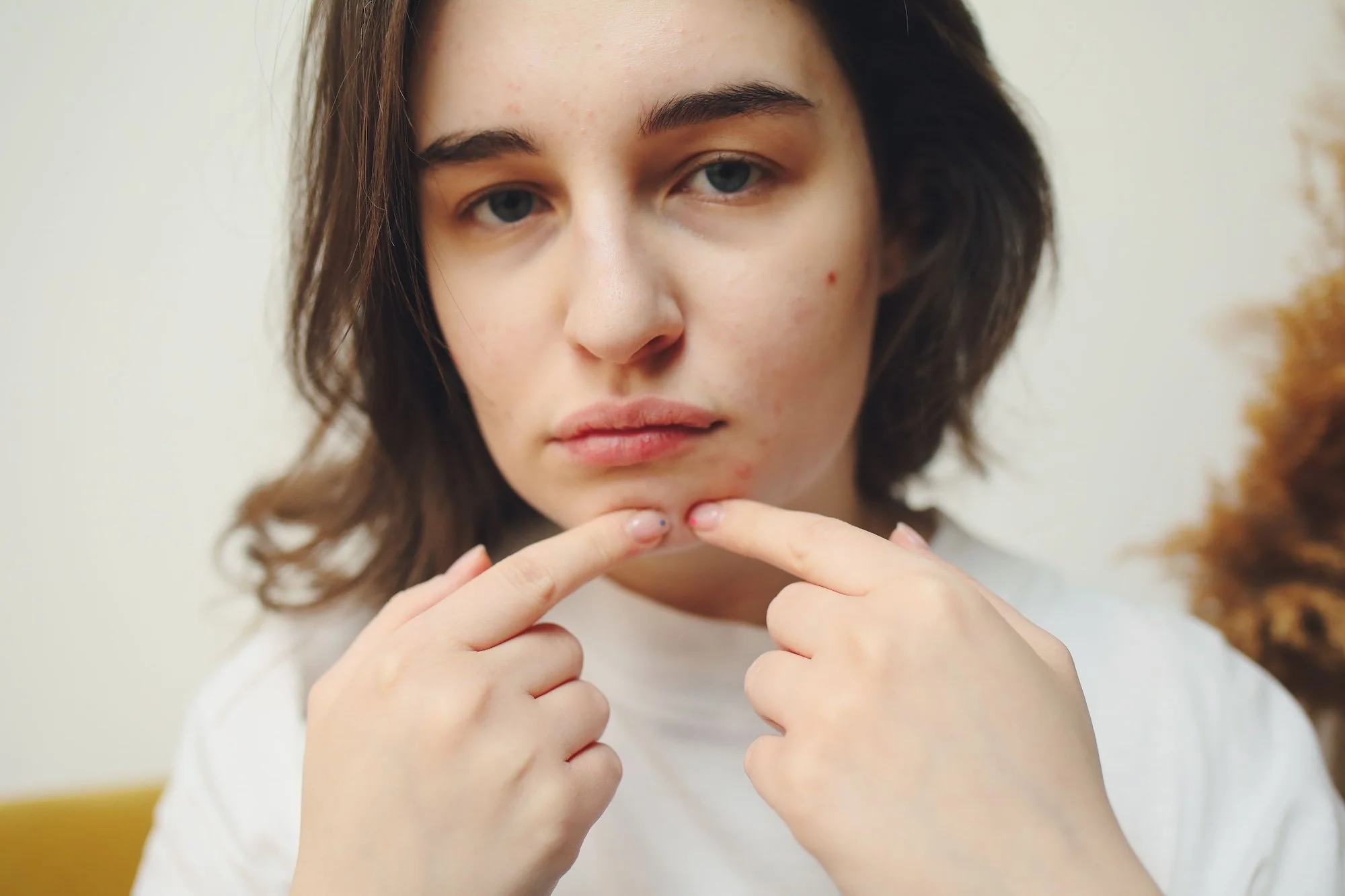
You're not sixteen. You've outgrown the drugstore aisle, the "just wash your face more" advice, and the assumption that acne is something you deal with once and move on from. And yet, here it is again — showing up along the jawline, the chin, sometimes worse than it ever was as a teenager.
Adult acne isn't a rerun of puberty. It behaves differently, it's triggered by different things, and it does not respond to the same fixes. Most of the products marketed for it are built around the wrong assumptions entirely.
If you've already tried the serums, the spot treatments, maybe even a med spa peel or two, and your skin is still breaking out (or worse than before), this is why.
In This Post
1) Why Adult Acne Isn't Teenage Acne
Teenage acne is largely a hormone-and-oil-production story. Adult acne is usually layered on top of a compromised skin barrier, and that changes everything about how it should be treated.
When the barrier is weakened, whether from years of over-exfoliating, harsh actives, or products that were never right for your skin in the first place, it can no longer regulate itself properly. Bacteria that used to be a non-issue start causing inflammation. Oil production gets erratic. Skin that used to calm down on its own just doesn't anymore.
This is why so many adult acne sufferers describe the same frustrating pattern: something works for a few weeks, then stops. Or it clears the breakouts but leaves the skin red, tight, and reactive. Treating adult acne like teenage acne (strip it, dry it out, hit it with acid) usually makes the barrier problem worse, which in turn makes the acne worse.
2) What's Actually Causing It
Hormonal Shifts
Hormonal fluctuations from cycles, stress, perimenopause, or coming off birth control all show up on the skin differently than they did at nineteen. The breakouts tend to sit deeper, along the jaw and chin, and last longer.
Barrier Damage from Over-Treating
This is the one nobody wants to hear: a lot of adult acne is made worse by the very routine built to fight it. Retinoids stacked with acids stacked with benzoyl peroxide, used daily, with no room for the skin to recover, wears down the barrier until it can't defend itself against anything.
Product Overload and Trend-Chasing
Following whatever skincare trend is circulating (a new acid, a new device, a new "holy grail" serum) without knowing what your skin can actually tolerate right now is one of the most common reasons breakouts persist. Skin isn't static. What worked last year, or even last month, may not be what it needs today.
3) What Helps vs. What Hurts
| What Helps | What Hurts |
|---|---|
| Barrier repair before actives | Jumping straight to acids or retinoids |
| Assessment based on how skin presents that day | Following a fixed routine regardless of skin's condition |
| Gentle, targeted anti-inflammatory support | Stripping, over-exfoliating, or drying the skin out |
| Professional-grade products matched to tolerance | Layering multiple strong actives at once |
| Patience and gradual correction | Chasing fast results with aggressive treatments |
4) How I Approach Adult Acne
There's no acne "package" or preset protocol here. Every visit starts with an evaluation of how your skin is actually behaving that day, not what a form or a product line assumes it should be doing.
Digital skin analysis gives a clear read on hydration, barrier function, sebum activity, and inflammation, so decisions aren't guesswork. From there, treatment might involve the Oxylight Ionix platform (oxygen infusion, LED light therapy to calm inflammation, or targeted modalities depending on what the skin needs), paired with professional-grade product lines like Forlle'd or Environ when barrier repair and cellular-level correction are the priority.
The goal isn't to blast the breakout into submission. It's to get the skin back to a place where it can regulate itself again, which is the only way adult acne actually stays gone.
- Your breakouts are concentrated along the jawline, chin, or lower cheeks?
- You've tried multiple products or routines that worked briefly, then stopped?
- Your skin feels reactive, tight, or irritated even when you're not actively breaking out?
- Acne showed up (or came back) well past your teenage years?
- You've spent real money on treatments or products with little lasting change?
If most of that sounds familiar, the issue likely isn't a lack of effort. It's that the approach hasn't matched what your skin is actually doing.
5) Adult Acne: Your Questions Answered
Why is my acne worse now in my 30s and 40s than it was as a teenager?
Adult acne is typically tied to a compromised barrier rather than just excess oil, and barriers weaken over years of sun exposure, harsh products, and hormonal shifts. The result is often deeper, longer-lasting breakouts than what you dealt with as a teen.
Can too much skincare actually cause acne?
Yes. Layering multiple strong actives (retinoids, acids, benzoyl peroxide) without giving the skin room to recover is one of the most common reasons adult acne persists or worsens. The barrier needs to function properly before actives can do their job without backfiring.
Is hormonal acne treated differently than regular acne?
The underlying trigger is different, but effective treatment still starts with the same question: what is the skin doing right now, and can it tolerate the correction it needs. That's assessed in person rather than assumed from a category.
Why did my acne come back after a facial or peel that seemed to help?
If a treatment clears breakouts temporarily but the barrier issue underneath was never addressed, the skin has no way to hold onto that improvement. Breakouts return because the root cause was never resolved.
How long does it take to see results with a barrier-first approach to acne?
It varies by skin, which is exactly why there's no preset timeline promised here. Digital skin analysis at the start gives a real baseline, so progress gets tracked against your skin's actual behavior rather than a generic expectation.
Final Thoughts
Adult acne responds to a different kind of care than what most products or trends are built around. If your skin has been telling you the same thing for a while now, it's worth actually listening to it.
See Related Posts